Slow Beauty, Small Patches: A Week-Long CBD Trial for Reactive British Skin
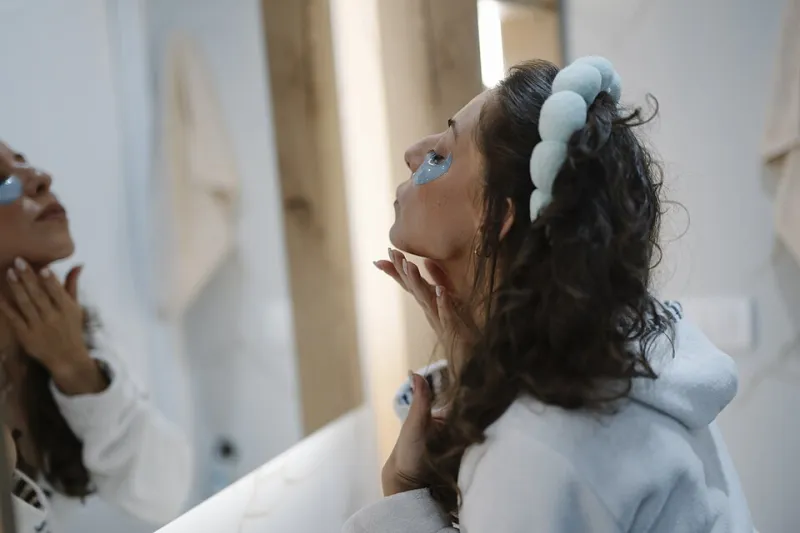
Photo: Shixart1985, CC BY 2.0, via Wikimedia Commons
There is a particular kind of British optimism that arrives with a new skincare product. You read the label, like the sound of the ingredients, picture a calmer complexion by Friday — and then apply it generously across your whole face. For most people, that is fine. For anyone with reactive skin, it is a small gamble dressed up as a routine.
CBD skincare is no exception. A serum, balm or facial oil may be beautifully formulated and still contain something your skin dislikes. The sensible approach is not fear; it is sequencing. Try one product, on one small area, for seven days, and let your skin do the talking.
Why one cheek is enough
A patch test is not a guarantee that nothing will ever go wrong, but it is a useful early-warning system. Testing on a single cheek — or along the jawline on one side — gives you a visible comparison. You can see whether redness, tingling or dryness is localised to the test area or simply part of your skin's normal weekly ups and downs.
Choose a patch about the size of a 50p coin. Clean the area, pat it dry, and apply the usual amount you would use on your face. Do not layer it with acids, retinol or exfoliants during the test week. If you want to know what the CBD product does on its own, give it a fair hearing.
Read the label before you read the reviews
UK cosmetic labels use INCI names, which can look like a chemistry exam. You do not need to memorise them, but it helps to scan for common irritants if your skin is sensitive. Fragrance is often listed as "Parfum" or "Fragrance". Essential-oil components such as limonene, linalool, citral and geraniol are common in natural-leaning products and can bother reactive skin. Alcohol denat can feel drying. Some CBD products include menthol or peppermint oil for a cooling effect; that tingle is not a sign of efficacy, and it is not for everyone.
Look for the CBD itself, usually listed as Cannabidiol, and check the carrier ingredients. Shea butter, jojoba and squalane suit many people; coconut oil and certain botanical extracts do not suit all. None of this is a verdict on the product. It is simply information to hold alongside your own skin's history.
The seven-day diary
Day 1 — The first application. Apply to the test patch only. Leave it for 24 hours. Record the time, the amount and anything you notice: warmth, tingling, nothing at all. Take a photo in daylight.
Day 2 — The morning after. Check the patch before washing your face. Is there redness that was not there yesterday? Dryness? A spot? If the skin looks calm, apply again and repeat the 24-hour wait.
Day 3 — The comparison. Look at both cheeks in the same light. This is why the one-cheek method works. Note any difference in texture, tone or tightness. Mild tingling that fades within a minute is one thing; stinging that builds is another.
Day 4 — The central heating test. British homes in November are a mix of cold commutes and radiators on full. Apply as usual and note whether the patch feels drier or tighter than the rest of your face. CBD balms can feel occlusive; serums can feel light. Neither is wrong, but your skin may have a preference.
Day 5 — The breakout check. A new spot is not automatically a reaction. It could be hormonal, heat-related or coincidence. Record where it is, what it looks like and whether it is confined to the test area. Do not squeeze, pick or add a spot treatment to the patch.
Day 6 — The repeat. By now you have applied the product several times. If your skin has been calm, continue. If you have seen persistent redness, flaking or a rash, stop. A patch test is not a challenge to be won.
Day 7 — The verdict. Compare your test cheek with the other side. If the skin is calm, you can consider expanding to the full face — slowly, and not on the same day as a workout, a hot bath or a new exfoliant. If there is any doubt, stop and keep the product for the back of your hands or return it if the retailer allows.
When to stop rather than push through
Stop immediately if you see swelling, hives, blistering, spreading redness or a burning sensation that does not settle. Seek medical advice if symptoms are severe or spreading. For milder reactions — dryness, a few bumps, a faint rash — stop using the product and let your skin settle before trying anything new. Do not apply another active to "fix" the area.
Tingling is the tricky one. A slight tingle can happen with some formulations, but CBD itself should not sting. If the sensation escalates, if it lasts more than a few minutes, or if it comes with redness, treat it as a stop sign.
What to write down
Keep it simple. Note the date, the product, the amount, the time and a few words on how the patch felt. Add a photo each morning in daylight. At the end of the week, you will have something more useful than a vague memory: a small record of how your skin responded. That is the whole point of the one-cheek experiment. Not to prove a product is perfect, but to find out whether it belongs in your routine.